Hexachlorobenzene

HCB, perchlorobenzene; formula: C6Cl6; CAS Registry Number: 118-74-1
Structure of hexachlorobenzene
Source: PubChem
Identifier: CID 8370
URL: https://pubchem.ncbi.nlm.nih.gov/compound/8370#section=2D-Structure

Fungicide which was mainly used in seed treatment and as wood and timber preservative

Furthermore, it is a flame retardant and plasticiser. In pyrotechnics it is used in smoke munitions.  Hexachlorobenzene is the precursor of a number of compounds such as pentachlorophenol and is a by-product in the production of many plastics and solvents.
Due to its relatively high vapour pressure it is very mobile and found in all environmental compartments.

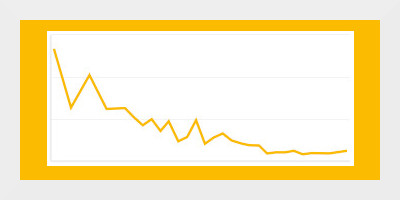
Environmentally relevant characteristics of hexachlorobenzene include:

Pesticides containing hexachlorobenzene are banned in the Federal Republic of Germany and the German Democratic Republic since 1981 and 1984, respectively.
When the Stockholm Convention entered into force in 2004, application of hexachlorobenzene was restricted to the use as chemical intermediate and as solvent for pesticides.

Specimen

  • Common mussel species as invasive animal in rivers and lakes with high information level for water pollution
  • Bioindicator in rivers and lakes
  • Fine insoluble mineral or organic particles in the water phase
  • Common brown alga of the coastal areas of the North and Baltic Sea
  • One of the most important edible mussel species common in the North and Baltic Sea
  • As the only viviparous fish in German nearshore waters, it is a bioindicator in nearshore coastal marine ecosystems.
  • Inshore, the herring gull mainly feeds from the sea: upon fish, mussels, and crabs.
  • A major primary producer in semi-natural and anthropogenic affected ecosystems.
  • A deciduous tree typical of ecosystems close to dense conurbations and an indicator for the characterisation of the immission situation during the vegetation period.
  • As the most dominant deciduous tree species in Central Europe, it plays a significant role in most nearly natural and also anthropogenically influenced forest ecosystems up to an altitude of 1100 m.
  • The roe deer is the most common of the larger herbivores (first order-consumer) to be found in the wild in Europe.
  • A pigeon species home in nearly every city.
  • As an organism living at ground level, it is a major driver of the decomposition of organic material (e.g. plant litter).
  • As an organism living at ground level, it is a major driver of the decomposition of organic material (e.g. plant litter).
  • Soil is livelihood and biosphere for humans, animals, plants and soil organisms. All the substances brought in are transported, transformed and/or accumulated in the soil.
  • Student groups with an even number of female and male students at the age of 20 to 29.

Sampling area

Sampling period

1982 - 2023